Systemic Wellbeing: What a Zurich Run Taught Me About Designing What Lasts
Written by: Eva Haussmann, Head of people and leadership
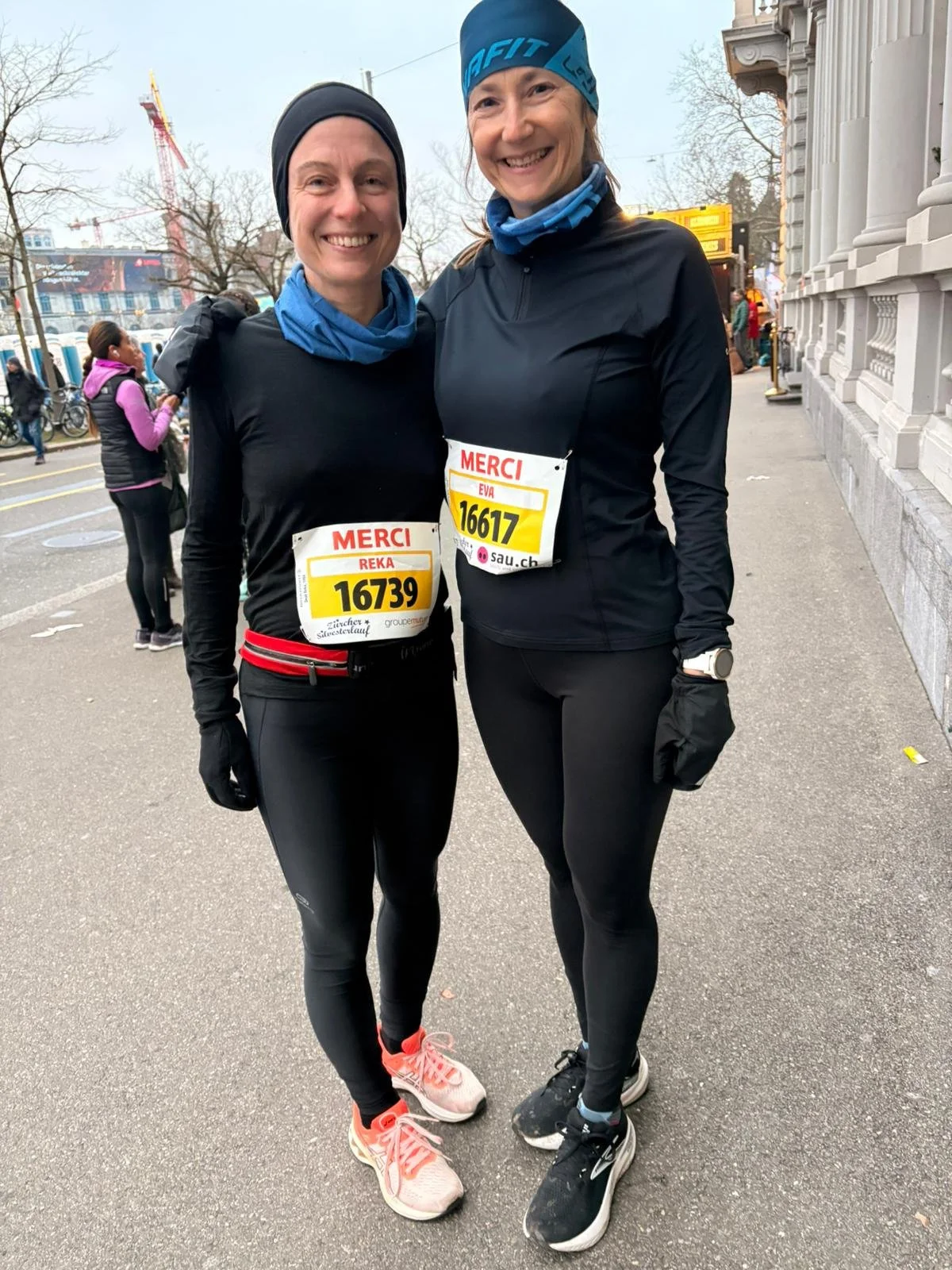
Last weekend, the founder of Wellbeing Designers, Reka Deak, and I ran the "Silvesterlauf" in Zurich together.
Now, let’s pause for a second to appreciate the utterly confusing name of this running event. "Silvesterlauf" suggests fireworks, champagne, and New Year’s Eve vibes – yet the race takes place before Christmas and looong before New Year’s Eve. Still, the name does absolutely nothing to diminish the magic of the event.
From morning until late evening, Zurich’s beautifully lit old town fills with runners. Huge groups of people move through the narrow streets – fast, slow, young, old, serious athletes, and cheerful hobby runners. It’s vibrant, festive, and unmistakably communal.
I realised that the "Silvesterlauf" has been part of my own wellbeing journey for many years.
I first ran it when I had just discovered running for myself. Later, when the kids were small, I joined the "Parents & Kids" category. My husband still fondly remembers carrying our youngest for the entire 2 km. A few years on, I somehow ended up taking all the kids from my son’s school class to the run – including a proper carb-loading dinner at our house the night before.
And this year, I ran with Reka. We chose the longest distance available: 8.5 km. Still a short race when compared to marathons or ultras – but long enough to leave space for conversation. And thinking.
Which brought us, quite naturally, back to our shared pet topic: How do we design wellbeing in a systemic way?
Here are my two cents.
If I go for a run on my own once, I’ve done something good for my wellbeing – assuming I don’t injure myself in the process.
If I join a running club and run regularly, my wellbeing practice becomes more sustainable.
But if I create an annual running event that mobilises an entire town, includes people of all ages and fitness levels, and returns year after year – then I’ve created wellbeing on a systemic level.
For me, systemic means two things:
Inclusive – no one is excluded by design
Sustainable – it’s a repeated process, not a one-off initiative
And that insight translates directly into organisations.
Anything we do for wellbeing at work should include the entire organisation, from top to bottom. And it should become a regular ritual, not a symbolic gesture.
This makes me think of the NGO I work for, where regular supervision is firmly institutionalised. Supervision creates a protected space where staff can share what’s on their mind – professionally and emotionally – moderated by an impartial, external supervisor. Importantly, this process includes the leader as well. That’s what makes it truly inclusive. It’s not about fixing individuals; it’s about strengthening the system.
On the other hand, I also recall the "Swiss Re-silience Day" at Swiss Re. A day off to say thank you to employees who worked tirelessly during Covid. A day where nobody had to check emails, knowing that everyone else was off too. A beautiful, generous, and heartfelt gesture. But certainly not a systemic wellbeing measure.
Systemic wellbeing is rarely flashy. It doesn’t rely on slogans or one-time events. It’s built quietly, consistently, and collectively – through structures, habits, and shared practices that make wellbeing possible even when things get tough.
With that, I’m curious: Have you experienced wellbeing measures that truly worked on a systemic level? What made them sustainable? What made them inclusive?
I’d love for you to share your experiences.
And in the meantime, we wish you a festive season filled with joy, rest, and plenty of opportunities to recharge your batteries – however that looks for you.
All the best,
Eva
About the Author:
Eva is a consultant and advisory board members of Wellbeing designers. As mental health champion and HR professional she is an advocate for human centric workplaces. You may also want to check out the first wellbeing designers podcast if you want to learn more about Eva and her experience in creating and implementing wellbeing strategies.
Click here to tune in to the podcast.
Learn more: Eva Haussmann